Welcome to the world of Lego® investment! Most of us started out as enthusiastic builders of the colourful bricks, and many of us still are. As the shelves fill up, though, we find ourselves in a new position: that of collector, investor or future seller.
To make that step easier, we'll give you 10 tips for managing your Lego collection in this article, from tracking and buying to storage, insurance and selling.
1. Overview of the Lego® collection with Brickfact
Some sets have already found a place in your collection, but the overview is fading faster than you would like. Which set was bought at what price? How many Donald Duck BrickHeadz are in the depths of the shelves?
To avoid such questions, it is advisable to record your Lego collection digitally, so that you always know what you own, what you paid and what your sets are worth today.
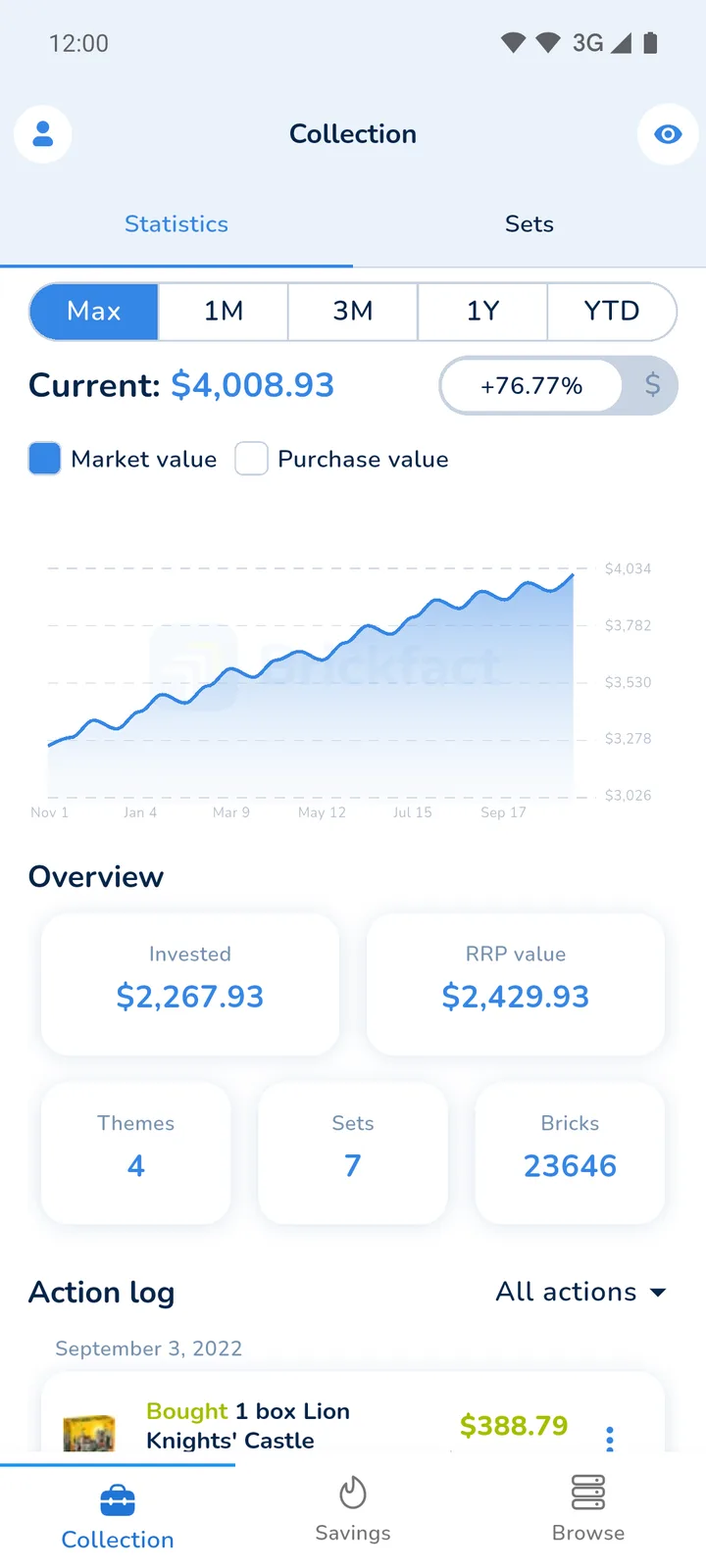
The free Brickfact app is made for exactly that. It tracks your Lego collection, shows the current market value of every set and calculates your profit or loss.
Set up Brickfact step by step
- Download the Brickfact app
- Add the sets you already own to your collection
- Enter the number of boxes, the purchase price, the date of purchase and the condition for each one
- Repeat this every time you buy, and record a sale in the same way when you sell a set
On a laptop, you can manage the same collection in the Lego collection tracker on brickfact.com. You sign in with the same account, and changes appear in the app and on the website.
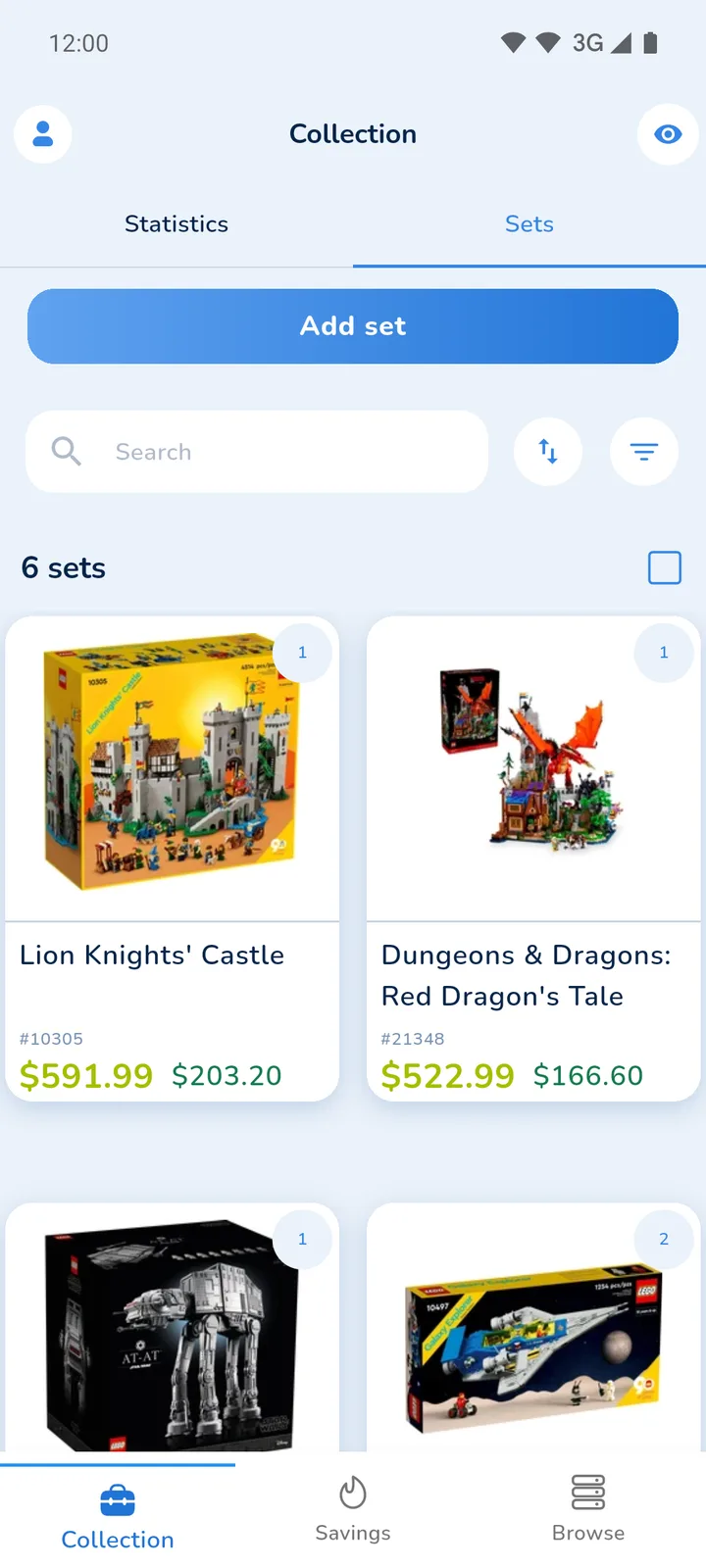
Brickfact is available as an iOS and Android app.
Click here to download


2. Purchase with a strategy
Buying Lego® sets at random only makes sense in rare cases, for example when they are heavily reduced. The best offers usually appear while a set is widely available and its end of life (EOL) is still some way off. Prices tend to rise once Lego reduces or stops deliveries. The Brickfact app and the set pages on brickfact.com show you the retirement status of every set and, where known, the expected retirement date.
For sets on your wish list, a Lego price alert tells you when your desired price is reached, and the current Lego deals show you what is discounted right now. Our Lego investment study shows how much the purchase price matters: collectors who bought at least 40% below RRP achieved clearly higher returns than the median.
3. Trust is good, control is better!
Wear and tear, dents or scratches: as Lego® collectors and investors, we don't need any of that. That's why it's especially important to inspect sets as soon as they arrive. Sets that are shipped without an outer carton, with the shipping label stuck directly on the box, are particularly at risk.
Set yourself a tolerance, and don't return sets for every small mark. Frequent returns can lead to your account being blocked by some shops. If a set shows real damage, you are entitled to an exchange or a refund.


4. The best Lego® storage
Introduce a storage system right from the start. Sorting the sets by theme and size is the obvious choice: you don't waste shelf height or depth, and you find every set quickly.
Ideally, you should label the shelves and note each set's location in a spreadsheet or another inventory tool, so that you can see straight away where the set you need is stored.
Large Lego® sets
For heavy and big Lego® sets, it is advisable to stand them on the long side on the shelf. Avoid simply laying large boxes flat and stacking other sets on top.

Small Lego® sets
Smaller sets with light contents can also stand on the short side. Turn them every few months to avoid bulges. Small sets such as the Skylines of the Architecture series, BrickHeadz or Speed Champions can be stacked, but keep the stacks low, roughly up to ten boxes, so the bottom boxes are not crushed. Sturdy cardboard boxes of the same size are also a good option for small sets: they stack more easily than loose sets, protect the corners and can be labelled.
What else needs to be considered
Heavy-duty shelving is great for storing Lego® boxes. It saves space, and you can adjust the shelf heights to the size of the sets. Shelves with a depth of 60 cm (about 24 in) and smooth shelf boards work best. Shelves with a depth of 50 cm (about 20 in) are an alternative. Keep the bottom shelf off the floor so that boxes are protected from water and dirt.
Lego boxes are best stored at a temperature of 57 to 68°F (14 to 20°C), ideally without large daily swings. The relative humidity should not exceed 55 to 60%. Higher values can lead to mould or mildew stains.
A simple thermo-hygrometer lets you keep an eye on both values. To prevent high humidity, there are passive options such as dehumidifying granules. This variant is inexpensive and still effective for smaller rooms.
Alternatively, you can use an electric dehumidifier. Models for smaller rooms are available from about $40, for larger rooms from about $180. Remember the electricity costs: a dehumidifier with an output of 200 W costs 6 cents per hour at an electricity price of 30 cents per kWh. Include this in your calculation.
Lego sets must be protected from UV light, otherwise unsightly fading can occur.
Example storage of a small Lego® collection

5. Plan the sale
Your shelves are filled up to the smallest corner, and some retired sets are surely waiting to be sold. To sell efficiently, plan the sale carefully. This includes suitable sales platforms (Amazon, eBay, BrickLink), good product photos and well-written listings. Compare the fees of each platform before you decide, as they reduce your profit.
You can take product photos with a photo box, or use the retailer's photos. Ask the retailer for permission in advance. If you sell on eBay, you can also use the eBay catalogue.

6. Don't forget to sell
Once sets have been retired for some time, check regularly whether it is time to sell. In our study of Lego prices after retirement, the median market value was 22.3% higher twelve months after the retirement month and 41.0% higher after 24 months. At the same time, almost one in five sets had no positive change after a year. Retirement alone is therefore no guarantee.
In the Brickfact app you can see which sets in your collection are already retired and judge from the price chart whether the time to sell has come. After the first sales, the cash flow starts rolling in and you can steadily expand your collection.
7. Perfectly stored, perfectly packed
When it is time for the first sales, your sets still have to reach their new owners safely. It would be all the more annoying if a set arrived damaged.
Make sure you have enough packaging materials in advance, as larger sets in particular are otherwise not easy to ship. You can reuse cardboard boxes and padding materials. Flattened boxes or boxes cut into pieces take up little space until you need them.
If you have a large Lego® collection and sell identical sets in larger numbers, it may be worth buying new boxes and packaging materials. Packing paper, bubble wrap and air cushions are good choices.

Free alternatives
- Newspaper
- Shredded paper
- Padding from your own orders, or from friends and family
8. Lego® Insurance
Despite all precautions, Lego sets can be damaged or even destroyed by fire or water. If you have a large collection, it is essential to plan for this extreme case.
For a collection worth a few hundred dollars, insurance is rarely worth it. Once the value exceeds an amount whose loss would really hurt you financially, you should consider suitable cover.
For private collections, talk to your insurance agent. Many household contents policies include an allowance for valuables, and a collection above that amount often needs a higher sum insured or additional cover. This usually means only a small surcharge.
The situation is different for commercial resellers, who can take out inventory insurance. The premium depends on the value of the stock, the storage location and the insurer, so compare several quotes. For traders, inventory insurance is advisable anyway: after a major loss, you would have no goods to sell and might no longer be able to pay current bills.
Whatever applies to you, keep an inventory list and photograph your stock regularly. If you record your Lego collection in Brickfact, it can also serve as evidence: purchase prices, dates and the current value of every set are recorded and updated continuously.
9. Stay up to date
To make good decisions about your collection, it is important to keep learning.
Follow Brickfact on Instagram and never miss news or new analyses. On the Brickfact website you can check the retirement status of sets, browse the current Lego deals and read our latest guides and studies on the blog.
10. Do not forget the joy
Last but not least, don't lose the joy of the bricks themselves. Every now and then it's fun to build a set or two yourself, isn't it?
Managing a Lego® collection: Conclusion
Building and managing a Lego® collection successfully takes a combination of strategic buying, careful storage and well-planned sales.
Digital tools such as the Brickfact app and the collection tracker on brickfact.com help you keep track of your sets and their value and choose good times to buy and sell. Proper storage keeps your sets in good condition and protects their value.
Sort your sets systematically and store them in a dry, dark place with stable temperatures. For larger collections, check your insurance cover. And for long-term success, stay informed and keep enjoying building. That way, your collection remains not only financially rewarding, but also personally enriching.
FAQ: Managing a Lego® Collection
Below are some of the most important questions about organizing a Lego® collection. For more detailed information, see the article.
Can I effectively manage my Lego® collection with an app?
Yes. The Brickfact app records the purchase dates, prices and condition of your sets and shows their current market value. The same collection is also available on brickfact.com.
Is it important to check new Lego® sets after purchase?
Yes, it is very important. Inspect sets for damage such as dents or scratches as soon as they arrive. If there is significant damage, insist on an exchange or a refund.
Is there a best time to sell Lego® sets?
There is no fixed time. In our data, the median market value rose by 22.3% in the first year after retirement and by 41.0% after two years, but almost one in five sets had not gained in value after a year. Check the price chart of each set before you sell.
What is the ideal humidity level for storing Lego® sets?
Keep the relative humidity below about 55 to 60%. Higher values can lead to mould or mildew stains.
What is the ideal storage temperature for Lego® bricks?
Lego sets are best stored at 57 to 68°F (14 to 20°C), ideally without large temperature swings.